General
Mission and Goals
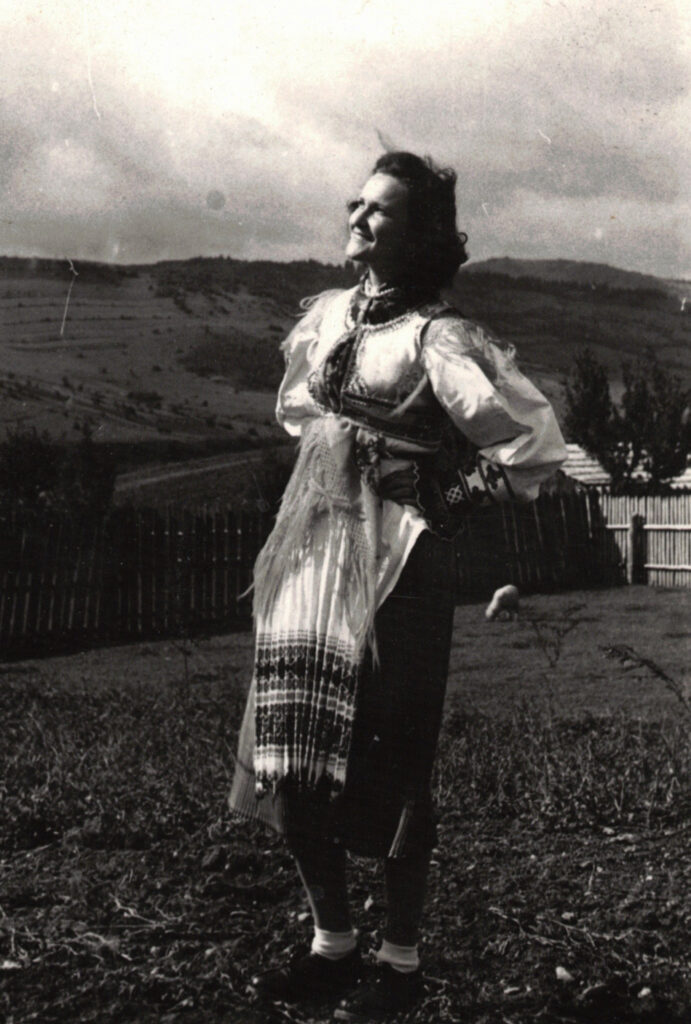
EKAiR Residency is a homage to Viera Gašparíková, affectionately known as Eka—a beloved grandmother, friend, colleague, and a distinguished figure in her field. The residency’s name, EKAiR, is a wordplay derived from Viera’s nickname Eka and the abbreviation for “artist in residency,” symbolizing a blend of personal legacy and creative exploration.
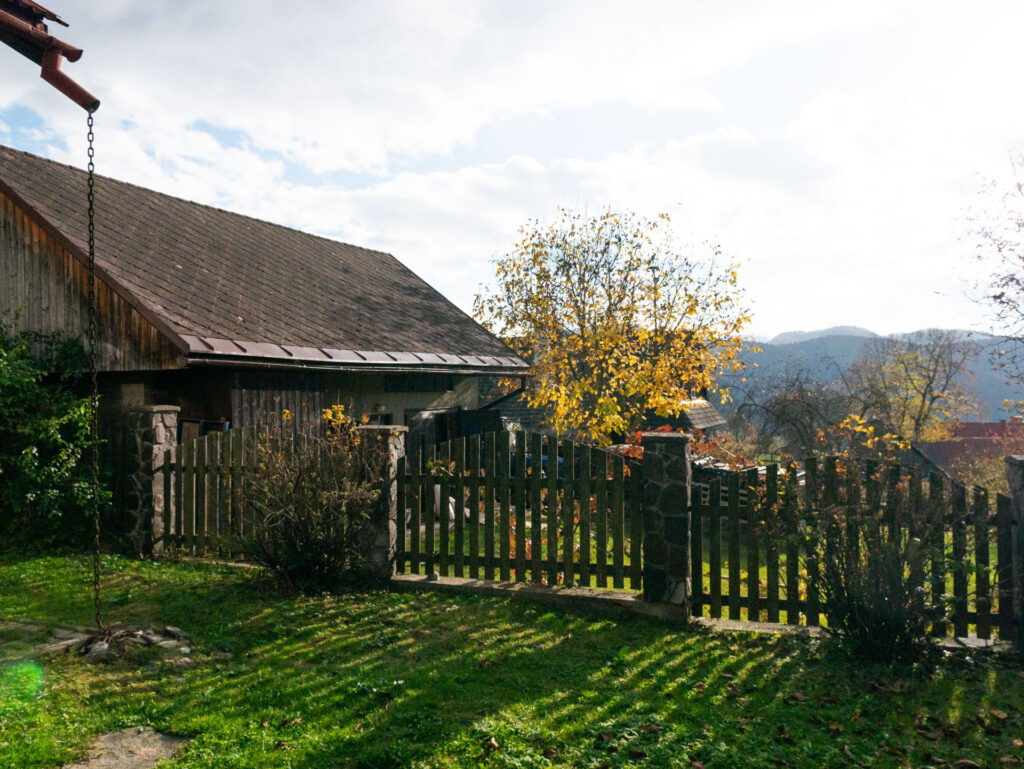
Located in the village of Šumiac in central Slovakia, EKAiR is housed in a traditional wooden cottage, or “drevenica,” where Eka spent her final years immersed in inspiration and writing. Just as Eka found tranquility and creativity in this idyllic setting, we aspire for our guests to experience peace, inspiration, and the rejuvenating power of both productive and unproductive time.
Residency Offerings
EKAiR is open to individuals from all creative disciplines, including artists, curators, writers, filmmakers, musicians, poets, architects, photographers, educators, and designers. We invite our guests to spend anywhere from a few days to one month in this environment, whether they seek active productivity or a passive retreat to recharge their energies for future creativity.
A Work in Progress
While EKAiR is still evolving towards its ultimate vision, including the incorporation of Eka’s literary legacy, we are currently operating a pilot residency program. This initiative is self-funded, supported by a symbolic contribution towards expenses. We warmly welcome creative minds to join us in this journey, finding inspiration in the same space that once fueled Eka’s remarkable productivity.
EKAiR Residency is more than just a creative retreat—it’s a tribute to Eka’s enduring spirit and a space for creative renewal.
____
EKAiR is managed by the civic association KOMPONENT, whose members include Martinka Bobríková, Petra Balíková, and Matej Bobrík.
LOCATION
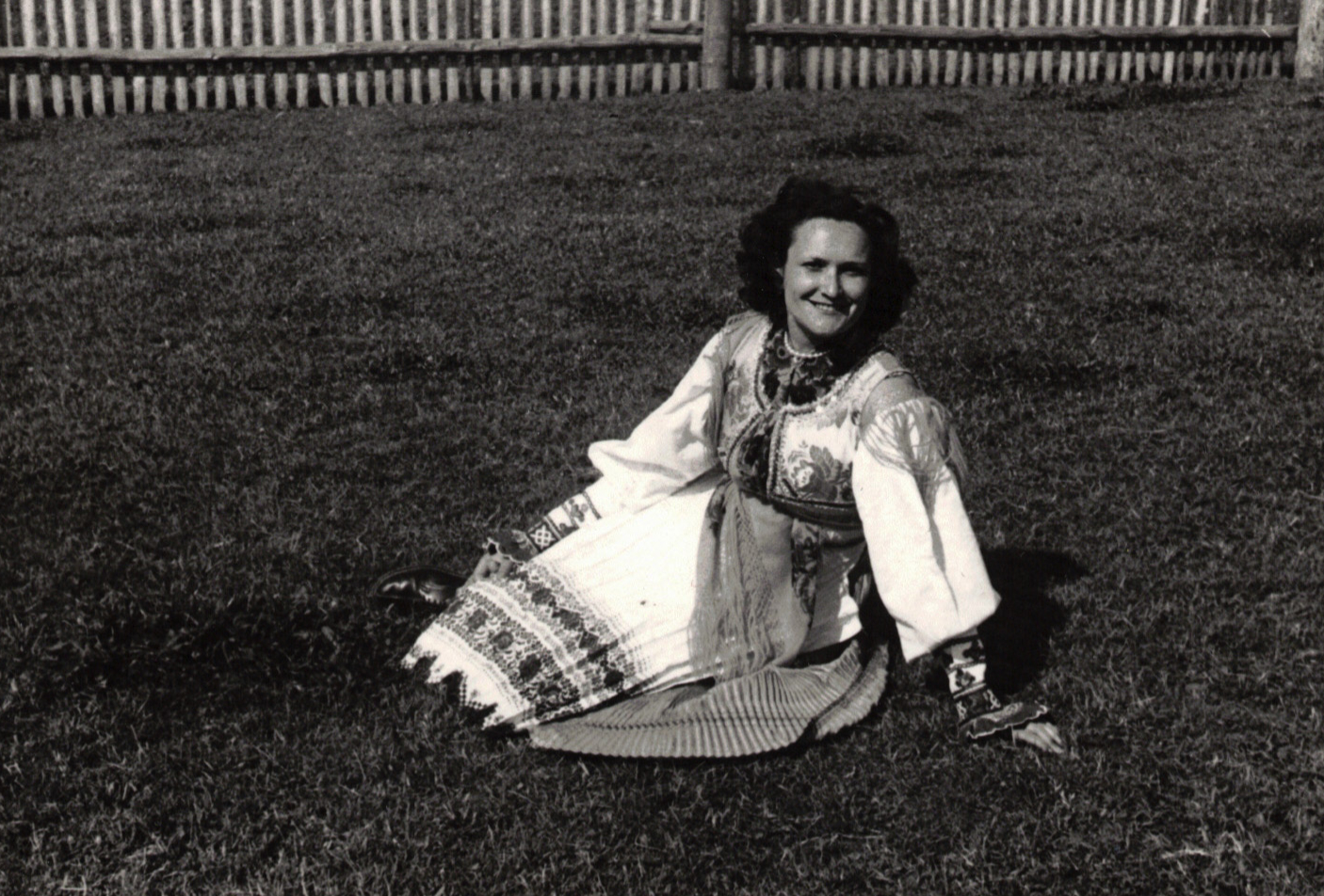
Šumiac, a quaint village with 1,200 residents, is renowned for its legendary polyphonic singing, timeless folklore, traditional barns, charming wooden houses, and warm-hearted locals. This idyllic village is perfect for sports and hiking, and you can easily cycle to the highest peak in the eastern part of the Low Tatras – the iconic and beloved Kráľova hoľa.
Šumiac is also home to rich folklore traditions and notable initiatives. One such initiative is the first sauna in Czechoslovakia, built shortly after World War I by Michal Demo. This sauna in Šumiac, known locally as Demova kupieľka, was restored and opened to the public as a museum in 2022. This unique landmark offers visitors a chance to step back in time and explore the history of saunating. However, as the historic sauna now functions solely as a museum piece, the village is planning to build a new, fully operational sauna by 2024. The new sauna will revive the old tradition of Šumiac saunating while offering fresh, hot experiences for visitors. It will blend beautifully with the captivating natural surroundings, reflecting modern architectural sensibilities. Just as the original sauna served both locals and travelers, the new sauna will be open to all. Visitors can book their sessions through a simple reservation system for a specific day and time, ensuring a seamless and enjoyable experience.
Another gem in Šumiac is Margarétkovo, a charming shop established in 2013. It offers a variety of healthy products, eco-friendly goods, and unique local crafts. Visitors can enjoy specialty coffees, delicious treats, and seasonal beverages. Margarétkovo also features a cozy café and an inviting summer terrace, making it a perfect spot to relax before exploring the nearby trails and cycling routes to the iconic Kráľova hoľa. This vibrant community hub connects people from all walks of life, blending tradition with contemporary charm.
More about the sauna project
More about margaretkovo
Residency
re‑cre‑zident is a blend of “repetition,” “recreation,” “creation,” and “residency,” designed to offer a unique space where the cyclical nature of creativity and relaxation fosters artistic growth. This concept acknowledges the importance of both repetitive practice and leisure in the creative process, providing a sanctuary for artists, curators, writers, filmmakers, musicians, poets, architects, photographers, educators, and designers to recharge and find inspiration.
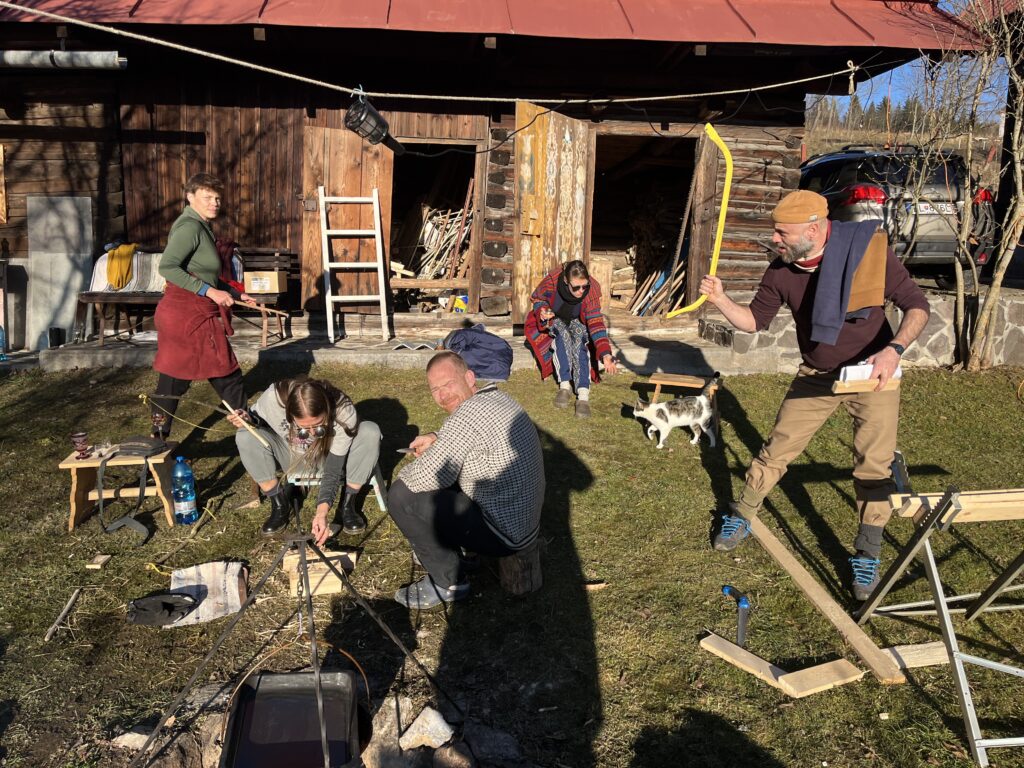
At EKAiR, the emphasis is on holistic well-being and creative rejuvenation. Situated in tranquil and inspiring settings, our re‑cre‑zidence encourages re‑cre‑zidents to step away from their usual routines, immerse themselves in nature, and engage in leisurely activities that stimulate their creative minds. The serene environment serves as a backdrop for contemplation, exploration, and artistic experimentation.
By blending recreation with residency, re‑cre‑zidency aims to nurture a balanced lifestyle for creatives, fostering periods of intense productivity interspersed with moments of restful recreation. This harmonious approach not only enhances creative output but also supports mental and emotional well-being, allowing residents to return to their work refreshed and invigorated.
Whether staying for a few days or a month, re‑cre‑zidency provides a nurturing space where the freedom to relax and the opportunity to create coexist, offering a unique and enriching experience for all participants.
Legacy
The First Lady of Slovak Fairy Tales worked at the Slovak Academy of Sciences (SAV) for almost 50 years, until 1993. However, she continued her research and publishing, even afterwards, releasing her key works as an emeritus researcher. Her fairy tale triptych Slovenské ľudové rozprávky [Slovak Folk Tales] Volumes 1 (1993), 2 (2001), and 3 (2004), in which she critically processed archival material from the so-called Wollman Archive (dating from 1928–1944), was described by Professor Milan Leščák as a colossal work of Slovak folkloristics.
The eminent Slovak folklorist, PhDr. Viera Gašparíková, DrSc., dedicated her entire professional life to traditional oral literature. At the seminar held for her 90th birthday, it came as no surprise when she presented a scholarly paper. What was her journey like in discovering folk prose—its themes, genres, storytellers, and life?
Life and the Path to Ethnography
Viera Gašparíková was born on April 15, 1928, in Martin, into a teachers’ family with three children. After graduating from grammar school, she enrolled at the Faculty of Arts of Comenius University (then called the Slovak University) in Bratislava, where she studied Slovak language and literature, French language and literature, and ethnography, which was then taught within the Department of History and Archaeology.
Her interest in literature and ethnography began to form during her grammar school studies in Martin, especially through her involvement in a self-education circle and under the influence of professors, some of whom later taught at Comenius University (e.g., R. Bednárik, R. Brtáň). She completed her university studies in 1952 with a doctorate in philosophy (PhDr.). Although she had already been working as an assistant at the Department of Ethnography during her studies, she wasn’t allowed to continue there afterward.
From 1953 to 1956, she worked as an editor at the magazine Život and as editor-in-chief of Výtvarný život.
After joining the Ethnographic Institute of the Slovak Academy of Sciences (SAV) in 1956, she was sent for postgraduate study at the Department of Ethnography and Folkloristics at Charles University in Prague. Upon completing her studies, she focused on folk prose. She obtained the title of Candidate of Sciences (CSc.) in 1960 with her work The Outlaw Michal Vdovec in the History and Folklore of the Gemer People.
In the mid-1960s, the Institute’s leadership entrusted her with preparing scholarly comparative commentary for the Slovenské ľudové rozprávky edition. However, the political climate at the time was not favorable for traditional scholarly approaches – the completed edition was shelved in the SAV archives. Consequently, Gašparíková focused on other, then-topical issues in oral folklore.
Her fieldwork and theoretical research concentrated on key topics, most notably the theme of resistance in Slovak folk prose, as well as collecting and studying Slovak folk narratives. She approached folk prose broadly — from textological and genre perspectives to classification — and, by synthesizing field research, reached comparative conclusions within broader interregional and interethnic contexts.
Comparative Study of Contemporary Topics in Oral Folkloristics
She deepened the understanding of social revolt in the 18th century by adding insights into the decline of banditry in 19th-century Slovakia, which she explored in several academic and popular studies. In a broader comparative context, she contributed methodologically, editorially, and organizationally to the international publication on bandit traditions in the Carpathians, titled Heroes or Bandits? – Geroj ili zbojnik? (2002), published in Russian and English.
Building on her studies of folk resistance traditions, she researched folkloric depictions of the Slovak National Uprising, producing numerous studies on anti-fascist heroes and the relationship between historical reality and its folk interpretation.
She also wrote extensively on the poetics of individual prose genres and the history of folkloristics, synthesizing her findings in the publication Slovak Folk Prose and Its Current Developmental Tendencies (1986), which was also published in Hungarian in 1988.
Genre Monographs and Major Works
Her deep knowledge of traditional prose genres is evident in her monographs:
- Humorous stories in Ostrovtipné príbehy a veliké cigánstva a žarty [Witty Tales and Great Roma Stories and Jokes] (1980),
- Magic fairy tales in Zlatá podkova, zlaté pero, zlatý vlas I–II [The Golden Horseshoe, the Golden Feather, the Golden Hair] (1984–1985).
Through long-term textual work, scientific commentary, and critical study, she brought to light, in Slovenské ľudové rozprávky I–III (1993, 2002, 2004), the storytelling archive recorded by students of the Slavic Seminar under Prof. F. Wollman between the wars. The same focus is evident in the German publication Slowakische Volksmärchen (2000).
Her meticulous and analytical nature made her a perfect fit for one of folkloristics’ classic branches – classification and cataloging of folk prose from the Wollman Archive. The result was the Catalogue of Slovak Folk Prose I–II (1991–1992).
International Comparative Work and Recognition
In her comparative research, she concentrated on intra-Slavic relationships, especially evident in her book Spievajúca lipka. Rozprávky západných Slovanov [The Singing Linden Tree. Fairy Tales of the Western Slavs] (1972). Since 1963, she presented her findings at International Congresses of Slavists (Sofia, Prague, Warsaw, Zagreb, Kyiv, Bratislava, Kraków, Ljubljana).
In 1989, she co-founded and actively participated in the editorial board of the International Bulletin of Slavic Folkloristics, the information forum of the Commission of Slavic Folklore under the International Committee of Slavists. She also served as vice-chair of the Slovak Committee of Slavists.
International Awards
Among her many honors highlighting her scientific and organizational contributions are:
- The Honorary Plaque of the International Committee of Slavists,
- The prestigious European Fairy Tale Prize (Europäische Märchenpreis).
- In 1988, the Slovak Academy of Sciences awarded her the Ľudovít Štúr Gold Plaque for her contributions to the social sciences.
Even after retiring, she continued to work actively on academic issues, mentored doctoral students, served as a reviewer, and commented in the media on traditional prose.
A Life Dedicated to Folk Narrative
Viera Gašparíková worked for almost half a century (1956–1993) at the Ethnographic Institute of the Slovak Academy of Sciences (today the Institute of Ethnology and Social Anthropology SAV) – at times as head of the department of spiritual culture, senior research fellow, editor of the journal Slovenský národopis, editorial coordinator, and more.
She was a member of several Slovak and international scholarly societies (Polish Folklore Society, International Society for Folk Narrative Research, Société Internationale d’Ethnologie et de Folklore).
Until her very last days, she remained interested in developments in her field. Symbolically, when asked what she would like her younger colleagues and friends to read to her during her final days, she whispered softly: “That book,” and with closed eyes, signaled that she loved listening to the Wollman fairy tales…
Honor to her memory!
Hana Hlôšková